You Won’t Believe These Hidden Gems in Mombasa
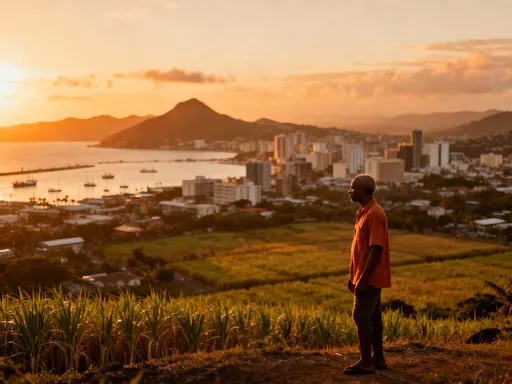
When I first thought of Mombasa, I pictured beaches and bustling markets—but not the city’s soul-hidden in centuries-old walls, quiet courtyards, and forgotten colonial facades. What I discovered was unexpected: architectural treasures quietly standing behind vines and time. These landmark buildings aren’t on every tourist map, but they tell the most powerful stories. From Omani fortresses to Swahili townhouses with carved doors, Mombasa’s hidden structures blend culture, resilience, and beauty in ways you have to see to believe. Far beyond its sun-kissed shores, the city reveals a layered past shaped by trade, faith, and survival. This is not just a coastal getaway; it’s a journey through living history, where every stone and carving holds memory, and every alleyway invites quiet reflection.
Uncovering Mombasa’s Architectural Secrets
Mombasa’s story begins long before modern tourism defined its image. For over a thousand years, this coastal city has stood as a meeting point of civilizations—Swahili, Arab, Persian, Indian, Portuguese, and British. Each wave of influence left its mark not only in language and cuisine but in the very fabric of the city’s architecture. Coral stone buildings rose alongside bustling ports, mosques echoed with call to prayer, and narrow alleyways wound through neighborhoods built to withstand both heat and conflict. Yet today, many of these structures remain overlooked, hidden in plain sight behind overgrown foliage or repurposed into shops and homes.
While Fort Jesus stands proudly as a symbol of Mombasa’s heritage, countless other buildings from the same eras have faded from public awareness. Urban development, shifting priorities, and the focus on beach-based tourism have pushed lesser-known landmarks into obscurity. Many travelers never venture beyond the coastline, missing the rich architectural narrative that unfolds in the Old Town and surrounding neighborhoods. This imbalance risks not only the physical deterioration of historic buildings but also the erosion of cultural memory. Preserving these sites is not about freezing them in time but about honoring the continuity of life, tradition, and identity.
The value of Mombasa’s architectural legacy lies in its diversity and resilience. Unlike cities where history is preserved behind glass, here, history lives and breathes. A 19th-century Swahili house may now house a family, a tailor, or a small art gallery. A colonial-era administrative building might serve as a local school. These adaptive uses keep the structures relevant, but they also require thoughtful stewardship to ensure their authenticity is not lost. Recognizing these hidden gems means shifting the lens from spectacle to substance, from the well-trodden path to the quiet corners where stories unfold in whispers rather than shouts.
Fort Jesus: The Famous Gateway to Deeper Discovery
No exploration of Mombasa’s architectural heritage is complete without visiting Fort Jesus, the 16th-century Portuguese fortress that stands sentinel over the Indian Ocean. Designated a UNESCO World Heritage Site, the fort is a marvel of military engineering, built from coral limestone and designed to withstand both siege and tropical climate. Its strategic location made it a prize contested by Portuguese, Omani, and British forces over centuries, each leaving subtle imprints on its walls and layout. Today, it serves as a museum, offering insight into the region’s complex colonial history and maritime trade networks.
Yet Fort Jesus should not be seen as the final destination but as the starting point for a deeper journey. Its prominence often overshadows the quieter, equally significant structures that surround it. Just beyond its ramparts lie remnants of Omani governor’s residences, ancient wells, and coral-stone buildings that once housed traders and artisans. These lesser-known sites, though less fortified, offer a more intimate glimpse into daily life across centuries. They reflect not just power and defense but domesticity, commerce, and community.
What makes Fort Jesus so valuable as an entry point is its ability to contextualize the rest of Mombasa’s architectural landscape. It introduces visitors to the materials—coral stone, lime mortar, mangrove timber—and construction techniques that define the region’s historic buildings. Once you understand these fundamentals, you begin to recognize them everywhere: in the thick walls of a crumbling warehouse, the arched doorway of a forgotten chapel, or the remnants of a colonial veranda. The fort becomes a key, unlocking a deeper appreciation for the city’s built environment.
For those willing to look beyond the museum placards and gift shops, Fort Jesus opens the door to a more personal, reflective kind of tourism. It invites curiosity about what lies just out of sight—structures that may lack official recognition but possess equal historical weight. The true richness of Mombasa’s past is not confined within one fortress but scattered throughout the city, waiting to be noticed, understood, and respected.
The Swahili Houses of Old Town: Beauty in the Details
Wandering through Mombasa’s Old Town is like stepping into a living archive of Swahili architecture. Here, narrow streets lined with coral stone buildings lead to hidden courtyards and intricately carved doorways that speak of wealth, status, and spiritual belief. These traditional Swahili houses, built between the 18th and early 20th centuries, are masterpieces of climate-responsive design and cultural expression. Thick walls provide insulation against the coastal heat, while high ceilings and strategically placed windows encourage natural ventilation. Lime-plastered facades, often painted in soft ochres or whites, glow gently in the afternoon sun.
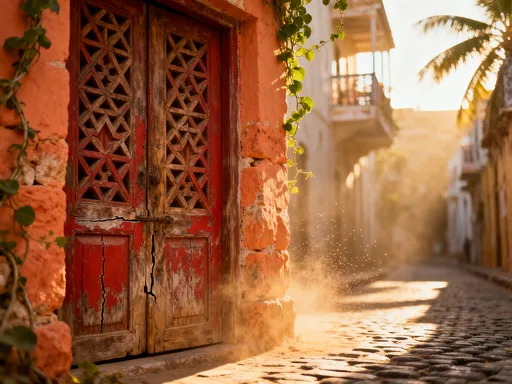
Perhaps the most striking feature of these homes is their wooden doors. Carved from durable hardwoods like teak or mahogany, these doors are more than entryways—they are statements. The carvings often include geometric patterns, floral motifs, and even Quranic inscriptions, reflecting the Islamic faith of many Swahili families. Some doors feature brass studs arranged in symbolic patterns, believed to offer protection. Others display a central lock plate shaped like a heart or a hand, blending function with spiritual meaning. Each door tells a story, not just of the family who lived there but of the artisans who crafted it, often passing skills down through generations.
Despite their beauty, many of these houses have fallen into disrepair due to lack of maintenance, urban migration, and the high cost of restoration. However, a growing number are being revitalized through community-led efforts and heritage tourism initiatives. Some have been converted into boutique guesthouses, offering visitors an authentic stay within historic walls. Others now function as cultural centers, hosting art exhibitions, traditional music performances, and workshops on Swahili craftsmanship. These adaptive uses not only preserve the buildings but also reinvigorate the surrounding neighborhoods.
Walking through Old Town, one begins to notice subtle differences in design—variations in window grilles, roof shapes, and courtyard layouts—that hint at the diverse influences shaping Swahili architecture. Indian traders brought decorative tiles and ornate metalwork, while Arab merchants influenced the use of inner courtyards and privacy-focused layouts. Yet the resulting style is distinctly local, born of adaptation and identity. To appreciate these homes is to appreciate the quiet dignity of everyday life preserved in stone and wood.
Hidden Colonial-Era Buildings Beyond the Fort
While the Portuguese and Omani periods left lasting architectural marks, the British colonial era also shaped Mombasa’s cityscape in ways that are often overlooked. Beyond the well-maintained Fort Jesus and a few prominent government buildings, numerous colonial-era structures still stand—quietly integrated into the urban fabric. These include former administrative offices, post offices, customs houses, and residential bungalows built during the late 19th and early 20th centuries. Constructed with a blend of British design principles and local materials, they feature wide verandas, high-pitched roofs, and large shuttered windows designed to cope with the humid climate.
Many of these buildings now serve new purposes. A former colonial courthouse may house a local NGO, while an old post office has been converted into a school or community health center. Some bungalows have been subdivided into apartments, their once-grand gardens now shared spaces among multiple families. Though they lack the dramatic presence of Fort Jesus, these structures are vital pieces of Mombasa’s layered history. They represent a period of administrative transformation, when the city became a key node in the British East Africa railway network and a hub for regional trade.
Yet their historical significance is often underappreciated. Unlike European cities where colonial architecture is preserved as heritage, in Mombasa, these buildings are frequently seen as utilitarian rather than cultural. Their deterioration—peeling paint, sagging roofs, blocked drainage—reflects both economic constraints and a lack of institutional focus on preservation. However, efforts are emerging to document and restore some of these sites, driven by historians, architects, and local residents who recognize their value.
What makes these colonial buildings particularly interesting is their hybrid nature. While the layout and structure follow British colonial templates, the construction relied heavily on Swahili and Indian labor, incorporating local craftsmanship in woodwork, masonry, and tile setting. This fusion creates a unique architectural language—one that speaks of power dynamics but also of collaboration and adaptation. Preserving these buildings is not about glorifying the colonial past but about acknowledging its complex legacy and ensuring that future generations can read the city’s history in its streets.
Religious Landmarks That Whisper History
Among Mombasa’s most enduring yet understated landmarks are its places of worship—mosques, churches, and temples that have stood for generations, often in the same locations for centuries. These religious sites are not merely architectural relics; they are living spaces of faith, community, and continuity. The Old Town alone is home to more than a dozen historic mosques, some dating back to the 15th century. Built from coral stone and featuring domes, minarets, and arched entrances, they reflect a blend of Arabic, Persian, and African design traditions. The Faza Mosque and Mandhry Mosque are notable examples, each with unique carvings and spatial layouts that reflect the evolving styles of Islamic architecture along the Swahili Coast.
Equally significant are the city’s historic churches, many established during the 19th and early 20th centuries by missionary groups. St. John’s Anglican Church and the Roman Catholic Cathedral of Jesus Christ are prominent, but smaller chapels and mission stations in neighborhoods like Shimanzi and Nyali also hold architectural and historical value. Constructed with locally sourced materials and adapted to the tropical climate, these buildings often feature steep roofs, stained-glass windows, and open-air naves to allow for airflow. Their continued use underscores the deep roots of Christian communities in Mombasa.
Indian traders and laborers also contributed to the city’s religious landscape, building Hindu temples and Sikh gurdwaras that remain active today. The Shree Cutch Satsang Swaminarayan Temple and the Guru Nanak Darbar Sikh Temple are testaments to the enduring presence of South Asian communities in Mombasa. These structures often feature colorful tile work, domed roofs, and intricate carvings, blending Indian architectural traditions with local influences.
What unites these diverse religious buildings is their role as anchors of community life. They are not only places of worship but also centers for education, charity, and social gatherings. Faith communities have played a crucial role in maintaining these structures, often funding repairs and restorations through collective effort. Their preservation is a quiet act of cultural stewardship, ensuring that spiritual and architectural heritage are passed down. For visitors, these sites offer a chance to witness the city’s pluralism—not as a political ideal but as a lived reality embedded in stone, wood, and prayer.
How to Explore These Sites Respectfully and Meaningfully
Exploring Mombasa’s hidden architectural gems requires more than a map—it demands mindfulness, respect, and intention. The best time to visit Old Town and surrounding historic areas is in the early morning or late afternoon, when the heat is milder and the light enhances the textures of coral stone and carved wood. Midday visits can be uncomfortable due to intense sun and limited shade, and some sites may be closed during prayer times or community events. Planning your route around these rhythms ensures a more pleasant and respectful experience.
Engaging a local guide is one of the most meaningful ways to deepen your understanding. Knowledgeable residents can share stories about specific buildings, explain the symbolism in carvings, and point out details that might otherwise go unnoticed. Many guides are affiliated with community-based tourism initiatives, meaning your support directly benefits local families and preservation efforts. These interactions also foster cultural exchange, allowing visitors to learn from those who live among the history they are exploring.
Photography etiquette is essential when visiting religious sites and private homes. Always ask permission before taking photos inside mosques, churches, or temples, and avoid photographing individuals without consent. When photographing buildings, focus on architectural details rather than intrusive close-ups of residents’ private spaces. Some homes in Old Town are still inhabited, and while their exteriors may be of interest, they are not museums. Respecting boundaries ensures that tourism remains a positive force rather than a source of disruption.
Transportation within Old Town is best done on foot, as the narrow streets are not designed for vehicles. Comfortable walking shoes, a hat, and water are recommended. For those arriving from other parts of the city, tuk-tuks and local minibuses (matatus) provide affordable access, though walking from nearby hotels allows for a more immersive experience. Safety in Old Town is generally good, especially during daylight hours, but it’s wise to stay aware of your surroundings and avoid isolated areas after dark. Traveling in small groups or with a guide enhances both safety and enjoyment.
Most importantly, approach these sites not as tourist attractions but as living parts of a vibrant community. Support local artisans by purchasing handmade crafts, visit community-run guesthouses, and contribute to heritage projects when possible. Sustainable tourism means leaving a positive footprint—financial, cultural, and environmental—so that Mombasa’s architectural treasures continue to thrive for generations to come.
Why These Hidden Buildings Matter for Mombasa’s Future
The preservation of Mombasa’s lesser-known architectural sites is not a nostalgic pursuit—it is an investment in cultural identity and sustainable development. These buildings are more than relics; they are tangible connections to the city’s diverse past, embodying centuries of resilience, adaptation, and creativity. When a Swahili house is restored, or a colonial schoolhouse repurposed, it becomes a symbol of continuity, showing that history and modernity can coexist. In a world where globalization often erases local character, Mombasa’s historic structures stand as affirmations of uniqueness and belonging.
Architectural preservation also plays a crucial role in community empowerment. When residents take pride in their heritage, they are more likely to invest in its protection. Local initiatives that restore buildings and train young people in traditional craftsmanship create jobs, foster skills, and strengthen social bonds. These efforts also attract thoughtful tourism—travelers who come not just to relax on beaches but to learn, connect, and contribute. This form of tourism generates income without compromising cultural integrity, offering an alternative to mass-market models that prioritize convenience over authenticity.
Moreover, these hidden buildings offer educational value for both locals and visitors. They serve as open-air classrooms where history, art, and environmental design converge. Children growing up in Mombasa can learn about their ancestors’ ingenuity in building homes that stay cool without electricity, or how trade shaped the city’s multicultural identity. Tourists gain a deeper understanding of East Africa’s coastal civilization, moving beyond stereotypes to appreciate the sophistication and richness of Swahili culture.
Ultimately, seeing Mombasa as a living museum transforms how we experience the city. It shifts the focus from escape to engagement, from consumption to connection. The beaches will always draw visitors, but it is the quiet courtyards, the carved doors, the whispering mosques, and the sunlit verandas that reveal the city’s soul. By recognizing and protecting these hidden gems, we ensure that Mombasa remains not just a destination, but a story—one that continues to unfold with dignity, beauty, and hope.