Uncovering Osh: Where Silk Road Soul Meets Street Art Pulse
Ever wondered what it feels like to step into a city where ancient bazaars hum with Soviet echoes and mountain winds carry centuries of storytelling? I didn’t either—until I wandered into Osh, Kyrgyzstan. Far from polished tourist trails, this gritty, golden-hued city surprised me with vibrant murals, felt-lined teahouses, and crafts whispering of forgotten empires. Here, culture isn’t performed—it lives. Let me take you through the art and soul of a place time forgot, but creativity never left.
First Impressions: Chaos, Color, and the Spirit of Osh
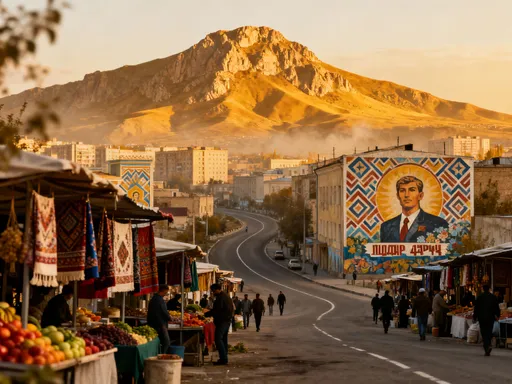
Osh does not ease you in. It announces itself with a roar of marshrutka horns, the scent of cumin and charred dough, and a skyline fractured by minarets, satellite dishes, and the ever-present hulk of Sulayman Mountain. Unlike Bishkek, Kyrgyzstan’s more orderly capital, Osh feels like a city that breathes on its own terms—unpolished, unapologetic, and utterly alive. Its streets pulse with movement: women in embroidered headscarves haggle over apricots, men in woolen hats sip tea from chipped glasses, and children weave through traffic with trays of freshly baked katyrma flatbread balanced on their heads. The air is thick with a blend of languages—Kyrgyz, Uzbek, Russian—interwoven in rapid-fire exchanges that mirror the city’s layered past.
This sensory overload is not chaos for chaos’s sake. It is the rhythm of a city that has long served as a crossroads. For over 3,000 years, Osh has stood at the heart of the Silk Road, absorbing influences from Persian traders, Mongol conquerors, and Russian imperialists. Each wave left its mark—not in grand monuments, but in the textures of daily life. The Soviet-era apartment blocks with peeling paint stand beside 19th-century wooden houses adorned with carved eaves. A vendor selling sour mare’s milk in a ceramic bowl might be using a family recipe passed down for generations, while his son scrolls through a smartphone displaying the latest music from Tashkent.
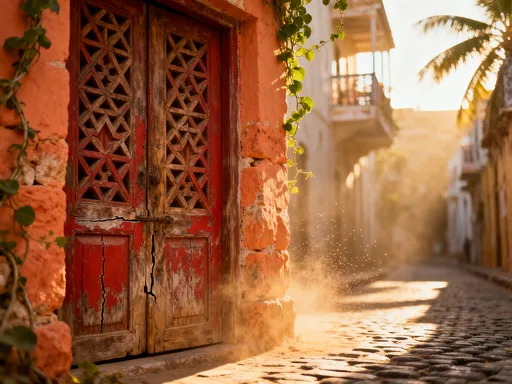
What makes Osh compelling is not its perfection, but its authenticity. There are no curated tourist zones here, no sanitized facades. The city wears its history on its sleeve, in the cracks of its sidewalks and the patina of its market stalls. The golden light of late afternoon bathes the dusty streets in a warm glow, softening the edges of crumbling facades and making even the most mundane scenes feel cinematic. This is a place where tradition and modernity don’t compete—they coexist, often in the same breath. And it is precisely this rawness that makes Osh a revelation for travelers seeking more than just postcard moments.
Sulayman Mountain: A Living Canvas of Faith and Folklore
Rising like a sentinel over the city, Sulayman Mountain is not just a geological formation—it is Osh’s spiritual anchor. Designated a UNESCO World Heritage Site in 2009, this sacred mountain is believed to be one of the oldest continuously worshipped sites in Central Asia. Long before Islam took root, shamans and animist priests climbed its rugged slopes to commune with spirits. Later, Sufi pilgrims carved prayer niches into its caves, leaving behind centuries of devotion etched into stone. Today, the mountain remains a place of pilgrimage, where locals tie colorful ribbons to trees, light candles in dimly lit grottoes, and whisper prayers into the wind.
The ascent is neither smooth nor swift. The trails are uneven, marked by worn steps and handrails bolted into the rock. Along the way, visitors encounter ancient petroglyphs—faded carvings of ibex, suns, and human figures—some dating back over 2,500 years. These images are not displayed behind glass; they are part of the landscape, touched by rain, wind, and the occasional graffitied initials. This blending of the sacred and the everyday is one of Sulayman’s most striking features. A prayer niche might sit beside a Soviet-era slogan painted in peeling red letters: “Glory to Labor.” There is no attempt to erase the past—only to let it accumulate, layer upon layer.
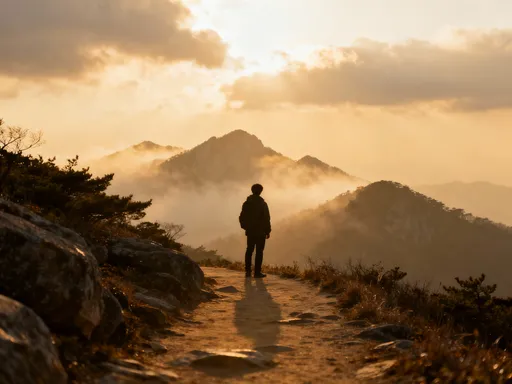
At the summit, the view is breathtaking. Osh sprawls below, a patchwork of red-tiled roofs, bustling markets, and winding streets. But the true power of the mountain lies not in the vista, but in the feeling it evokes—a sense of continuity, of time folding in on itself. Locals speak of the mountain as a living entity, one that listens and remembers. Some believe that if you walk the same path three times, your wish will be granted. Others come simply to be still, to sit in silence among the prayer flags fluttering in the wind. For the traveler, Sulayman offers more than a hike—it offers a meditation on faith, memory, and the enduring human need to connect with something greater than oneself.
The Heartbeat of the Bazaar: Art in Motion at Jayma Market
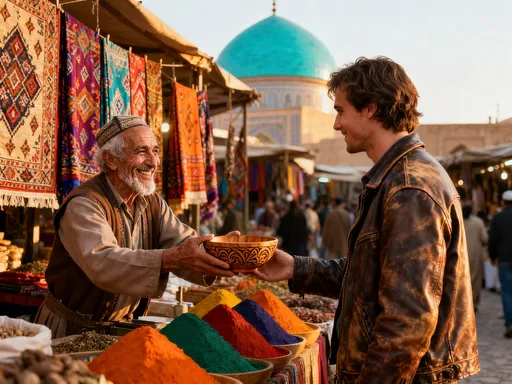
If Sulayman Mountain is Osh’s soul, then Jayma Market is its beating heart. Covering more than 30 hectares, this sprawling bazaar is not just a place to buy goods—it is a living archive of Central Asian culture. To walk through Jayma is to journey through time and space: the scent of dried apricots from Uzbekistan, the rustle of handwoven silk from Fergana, the metallic glint of copper pots hammered into shape by Kyrgyz artisans. Every stall tells a story, and every vendor is a custodian of tradition.
One of the most striking features of Jayma is its diversity. As one of the largest markets in Central Asia, it draws traders from across the region, creating a dynamic fusion of Kyrgyz, Uzbek, and Dungan (Central Asian Chinese Muslim) influences. A woman in a floral headscarf might sell shyrdaks—traditional felt rugs adorned with geometric patterns that symbolize protection, fertility, or the cosmos—while a man nearby offers Uzbek suzani textiles embroidered with floral motifs that once adorned bridal chambers. These designs are not merely decorative; they are encoded with meaning, passed down through generations, each stitch a silent testament to identity and belonging.
But Jayma is not a museum. It is a working economy, vibrant and adaptive. While some goods—like hand-forged knives and wooden yurts—are made locally, others are imported from neighboring countries, reflecting Osh’s role as a commercial hub. Yet even in this modern marketplace, craftsmanship remains central. Artisans still use age-old techniques: felt is pounded by hand, wool is dyed with natural pigments, and ceramics are shaped on foot-powered wheels. Visitors who take the time to observe—rather than simply purchase—will find themselves drawn into conversations about how a shyrdak is made, why certain patterns are used, or how a copper bowl is polished to a mirror finish. These exchanges are not transactions; they are moments of cultural connection, fleeting but profound.
Street Art with a Story: Murals That Speak History
Turn a corner on Chui Avenue, and you might find yourself face to face with a 15-meter-tall portrait of Manas, the legendary Kyrgyz hero whose epic poem spans over 500,000 lines. Another wall might depict a group of Soviet-era workers, their faces rendered in bold strokes, now overlaid with stenciled sheep and traditional ornamentation. These murals are not commissioned by the city or funded by international grants—they are the work of local artists who see the urban landscape as a canvas for memory, identity, and quiet resistance.
Osh’s street art scene is both spontaneous and deeply intentional. Unlike the polished murals of Western cities, these works often appear on crumbling walls, beneath power lines, or beside forgotten alleys. Their impermanence is part of their power. A mural might last only a few months before it is painted over, weathered away, or obscured by new construction. Yet in that brief window, it speaks. One piece shows a woman in traditional dress holding a smartphone, her eyes reflecting a screen filled with ancient symbols. Another blends the silhouette of Sulayman Mountain with the circuitry of a microchip, suggesting a fusion of the sacred and the digital.
What makes these murals compelling is their narrative depth. They do not merely decorate; they comment. A faded painting of a Soviet tractor is now flanked by images of yurts and horses, as if to say: progress did not erase us. Another mural shows a child drawing on a wall, with the words “Our past is not a ruin—it is a sketch” written in Kyrgyz and Russian. These works reflect a city in conversation with itself, grappling with questions of heritage, modernity, and belonging. For the traveler, they offer a rare glimpse into the inner life of Osh—not as it is marketed, but as it is felt.
Craftsmanship in the Backstreets: Finding Tradition Off the Grid
Beyond the main roads and market stalls, Osh’s true artisans work in quiet obscurity. Tucked into narrow alleys, their workshops are unmarked, their doors often left ajar. Inside, the air is thick with the smell of wool, wet clay, and hot metal. Here, craftsmanship is not a performance for tourists—it is a daily practice, sustained by necessity and pride. A woman in her sixties pounds layers of sheep’s wool into felt, her arms moving with the rhythm of decades. Nearby, an elderly potter shapes a bowl on a wobbly wheel, his hands guided by muscle memory. These are not demonstrations; they are acts of preservation.
What distinguishes Osh’s craft traditions is their resistance to standardization. Unlike mass-produced souvenirs sold in tourist shops, handmade items from these workshops are unique, bearing the marks of the maker. A shyrdak rug might have a slight irregularity in its pattern, not because of carelessness, but because it was made freehand, without a template. A copper teapot might have a dent near the handle—evidence of the hammer’s force, but also of its authenticity. These imperfections are not flaws; they are signatures.
Yet this way of life is under pressure. Younger generations are increasingly drawn to cities, schools, and digital economies, leaving fewer hands to carry on these skills. Some artisans have adapted, selling their work online or collaborating with design collectives. Others continue as they always have, hoping that someone—local or visitor—will recognize the value in what they do. For the traveler willing to wander beyond the main streets, seeking out these workshops is not just a way to acquire meaningful souvenirs. It is a way to participate in cultural continuity, to honor the quiet dignity of those who keep tradition alive, one stitch, one stroke, one hammer blow at a time.
Tea, Textiles, and Talk: Cultural Exchange in Everyday Spaces
Culture is not always found in grand gestures. In Osh, it lives in the small moments: the shared pot of hot tea in a dimly lit courtyard, the laughter that erupts when a guest mispronounces a word, the silent nod of appreciation when someone admires a hand-embroidered shawl. These exchanges do not require translation. They are built on hospitality, a value deeply embedded in Central Asian life.
One evening, a local family invited a visitor into their home after noticing her interest in their grandmother’s needlework. Over bowls of lagman—a hearty noodle soup simmered with lamb and vegetables—they explained the symbolism of the patterns being stitched: the ram’s horn for strength, the tree of life for continuity, the water wave for prosperity. The grandmother, speaking little Russian, communicated through gestures, smiles, and the occasional hum of a folk tune. No cameras were allowed, no photos taken. The moment was not for display—it was for sharing.
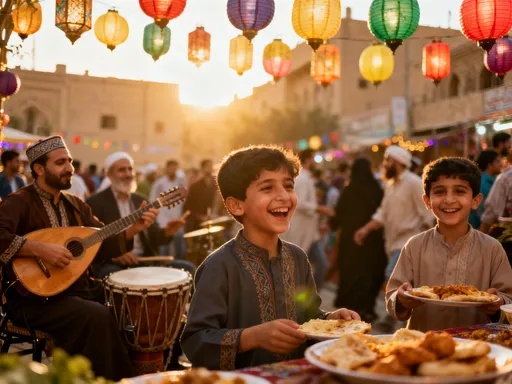
Such encounters are not staged. They arise from genuine curiosity and mutual respect. In a teahouse near the bazaar, a man strums a dombra, a two-stringed lute, while others join in with verses from the Manas epic. The music is not performed for tips; it is part of the evening’s rhythm. A traveler who sits quietly, listens, and perhaps offers a small compliment, may be invited to share a glass of compote or a piece of honey-drenched baklava. These gestures are not transactional. They are expressions of a worldview in which guests are blessings, and stories are meant to be passed on.
It is in these unscripted moments that cultural immersion becomes real. There are no entry fees, no schedules, no guides. Only presence. And in that presence, a deeper understanding emerges—not of a place, but of the people who call it home.
Why Osh Matters: Rediscovering Authenticity in Travel
In an age of Instagrammable destinations and curated experiences, Osh stands apart. It does not cater to comfort. It does not promise luxury. What it offers is something rarer: authenticity. Here, culture is not packaged, performed, or polished for consumption. It is lived—imperfectly, passionately, and continuously. The murals on the walls, the felt rugs in the bazaar, the prayers whispered on the mountain—these are not relics. They are living expressions of identity, shaped by history but firmly rooted in the present.
Osh challenges the modern traveler to reconsider what discovery means. It asks us to move beyond convenience, to embrace uncertainty, and to find beauty in the unvarnished. It reminds us that the most meaningful encounters often happen off the map, in conversations with strangers, in the quiet observation of daily rituals, in the willingness to be a guest rather than a spectator.
More than a destination, Osh is an invitation—to slow down, to listen, to engage. It is a call to seek depth over convenience, context over cliché. In a world where so much feels standardized, Osh remains gloriously, defiantly itself. And for those willing to wander its streets with open eyes and an open heart, it offers a rare gift: the chance to witness culture not as a display, but as a way of being.