Secret Views You’ve Never Seen – Port Louis Like a Local
Ever wondered what lies beyond the postcard spots in Port Louis? I stumbled upon hidden viewpoints most tourists miss—places where the city’s soul shines through vibrant markets, quiet hills, and ocean breezes. These aren’t just scenic lookouts; they’re moments of real connection. From sunrise over the harbor to golden-hour silhouettes against mountain ridges, these vantage points offer more than beauty—they reveal the rhythm of daily life, the whispers of history, and the quiet pride of locals who call this coastal capital home. If you're chasing authenticity over crowds, you gotta see this.
The Pulse of the City from Caudan Waterfront
The Caudan Waterfront is often labeled a tourist destination, but to reduce it to that is to misunderstand its heartbeat. This promenade, stretching along the edge of Port Louis’ natural harbor, serves as both a gateway and a mirror—reflecting the energy of the city back at those who pause long enough to watch. In the early morning, before the shops open and the cruise passengers disembark, the waterfront transforms. The stillness is broken only by the gentle lapping of waves against moored boats and the distant hum of a fisherman untangling his net. Sunlight begins to climb over the hills to the east, painting the surface of the water in molten gold. It’s in these quiet hours that the true character of the place emerges—not as a curated experience, but as a living, breathing part of urban life.
By mid-morning, the scene shifts. Office workers stroll during their breaks, couples sip coffee from local cafés, and children chase pigeons near the modern art installations. The contrast between the historic customs building and the sleek glass façades of the shopping complex tells a story of evolution. Yet the real magic happens when you step slightly off the main path and find a bench facing the harbor. From here, you can see the ferry from Rodrigues Island making its slow approach, its deck crowded with returning residents and cargo. Fishermen haul in their morning catch near the breakwater, their movements rhythmic and unhurried. This is not performance for visitors—it’s the unscripted reality of a port city that has thrived for centuries.
Photographers often come at dawn to capture the symmetry of reflections in the tidal pools, but locals know the value of this space at all hours. Joggers trace the curved path with practiced ease, their breath syncing with the tide. The waterfront is more than a scenic walk; it’s a social artery, a place where business, leisure, and community intersect. For travelers seeking to understand Port Louis beyond its surface, this is the ideal starting point—not because it’s hidden, but because it reveals so much when seen with intention. To experience it fully, come early, stay late, and let the rhythm of the city guide your pace.
Champ de Mars: Where History Meets Horizon
At the geographic and historical heart of Port Louis stands the Champ de Mars racecourse, the oldest horse racing track in the Southern Hemisphere. Opened in 1812, it has witnessed over two centuries of social change, colonial influence, and national identity taking shape. But beyond its storied past, the racecourse offers something unexpected: one of the most panoramic and emotionally resonant viewpoints in the city. The wooden grandstands, weathered by salt and sun, rise just high enough to provide a sweeping vista of Port Louis nestled between mountains and sea. From this elevation, the city unfolds like a layered tapestry—red-tiled roofs, green palm fronds, and the distant curve of the coastline.
On race days, which occur nearly every Saturday, the atmosphere is electric. Crowds in colorful attire fill the stands, vendors call out prices for snacks and programs, and the thunder of hooves echoes across the valley. Yet even on quiet weekdays, the space holds a powerful presence. The open field, meticulously maintained, becomes a sanctuary for kite flyers, dog walkers, and families enjoying a picnic. The sense of space is rare in a dense urban environment, and the unobstructed views in every direction make it a favorite among locals seeking both recreation and reflection. Standing at the top tier of the grandstand, you can trace the arc of the harbor, spot the dome of the Supreme Court, and see the first signs of the central highlands rising beyond the city limits.
What makes this viewpoint special is its duality. It is at once a place of celebration and stillness, of movement and meditation. The history embedded in the track—the colonial origins, the evolution into a national pastime, the role it plays in Mauritian culture—adds depth to the visual experience. Children fly kites shaped like dragons and fish, their laughter carried on the breeze, while elders sit on benches, watching the sky with quiet contentment. For the visitor, this is an invitation to slow down and observe. You don’t need to understand the rules of horse racing to feel the pulse of the city here. All you need is a willingness to look beyond the obvious and appreciate how a single space can hold so many layers of meaning.
The Quiet Climb to Fort Adelaide (La Citadelle)
Rising above the northern edge of Port Louis, Signal Mountain cradles Fort Adelaide, a British-era fortress built in the 1830s to guard against potential French invasion. Though the threat never materialized, the fort remains as a silent sentinel, offering one of the most breathtaking 360-degree views on the island. The ascent is modest—less than a 20-minute walk from the nearest road—but the sense of elevation and isolation is immediate. The path winds through thick vegetation, with banyan trees stretching their aerial roots across weathered stone walls, their branches forming a natural archway. Birds call from the canopy, and the air grows cooler with every step, carrying the scent of damp earth and wild herbs.
At the summit, the world opens up. To the west, the Indian Ocean stretches endlessly, its surface shifting from deep blue to turquoise near the reef. The harbor of Port Louis curves like a crescent moon, dotted with fishing boats and the occasional cargo ship. To the east, the city spreads out beneath you, a mosaic of rooftops, narrow streets, and bustling markets. Beyond, the Trois Mamelles mountains rise in gentle waves, their peaks often veiled in mist. On clear days, you can even spot the northern coastline and the silhouette of islands on the horizon. The fort itself is modest in size—a circular stone structure with cannons still in place—but its strategic importance is evident in the unimpeded lines of sight in every direction.
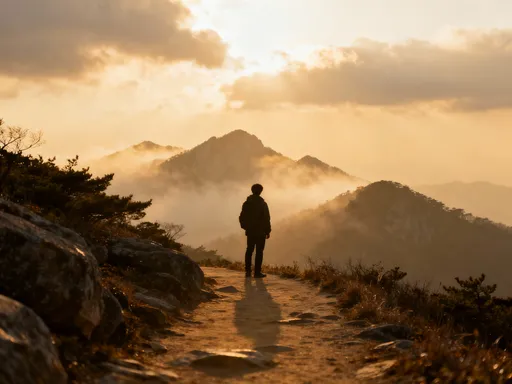
Today, Fort Adelaide is no longer a military installation but a place of quiet contemplation. Locals come here at sunset with thermoses of tea or coffee, sitting on the low walls to watch the sky ignite in shades of orange and purple. Couples whisper promises; students read books in the shade; photographers adjust their lenses for the perfect shot. The energy is peaceful, almost reverent. There are no loudspeakers, no souvenir stalls, no crowds—just the wind and the distant sound of city life far below. For visitors, this is a rare opportunity to experience Port Louis from a place of stillness, to see the city not as a checklist of attractions but as a living landscape shaped by history, geography, and human connection.
Hidden Pathways in the Jardin de la Compagnie
Behind the stately façade of the Government House lies a secret known to few tourists—the Jardin de la Compagnie. Once the private garden of French and British governors, this elegant green space slopes gently upward from the city center, shielded from noise and traffic by high stone walls and dense foliage. The entrance is unassuming, marked only by an iron gate, but stepping inside feels like entering another era. The garden is meticulously maintained, with symmetrical pathways lined with frangipani trees, their white and yellow blossoms releasing a delicate fragrance in the afternoon sun. Ancient mapou trees, some over two centuries old, spread their branches like umbrellas, creating pockets of cool shade.
The real reward comes from walking the stone steps that climb toward the upper terrace. With each level, the city fades further into the background. The honking of taxis, the chatter of market vendors, the rumble of buses—all are absorbed by the greenery. At the top, a simple stone bench faces west, offering a framed view of the port and the ocean beyond. It’s a quiet, intimate vantage point, perfect for watching the light change as evening approaches. Unlike the grand panoramas of Fort Adelaide or Montagne Longue, this view is understated, almost private. It doesn’t shout for attention; it invites you to sit, breathe, and simply be.
What makes the Jardin de la Compagnie so special is its contrast with the city just beyond its walls. In one direction, the capital pulses with energy and urgency. In the other, time seems to slow. Locals who discover this garden often return regularly, treating it as a refuge from the demands of daily life. Some come to read, others to meditate, a few to write in journals. There are no rules, no schedules—just the permission to pause. For the traveler, this is a reminder that beauty is not always found in the grand or the famous. Sometimes, it’s in the quiet corners, the overlooked spaces, the places where history and tranquility coexist. To visit is to participate in a small act of mindfulness, a moment of stillness in the midst of motion.
The Backstreets of Line Barracks with a View
Just south of the city center lies Line Barracks, a residential neighborhood that few tourists venture into. Unlike the polished attractions of the waterfront or the historic charm of the market district, this area offers no signs, no guided tours, no souvenir shops. What it does offer is authenticity. The streets are narrow, lined with pastel-colored homes, their wooden shutters thrown open to let in the breeze. Laundry hangs between houses, fluttering like flags. Children play with homemade toys in the alleys, and elders sit on doorsteps, fanning themselves and greeting passersby with warm smiles. It’s a community that lives at its own pace, untouched by the rush of tourism.
But within this ordinary streetscape are moments of extraordinary beauty. One such moment comes when you turn down a small alley behind a modest Hindu temple. The path is uneven, paved with old concrete slabs, but as you climb, the city suddenly spreads out before you. From this informal overlook, you can see the entire harbor, the curve of the coastline, and the mountains rising in the distance. There’s no railing, no plaque, no admission fee—just a concrete ledge where locals sometimes sit with their morning tea. It’s not designed as a tourist spot; it’s a byproduct of geography and daily life. People use it as a shortcut, a place to rest, or simply a spot to enjoy the breeze.
What makes this viewpoint powerful is its lack of pretense. There’s no effort to impress, no attempt to cater to outsiders. It exists because it’s useful, because it offers a moment of perspective in the middle of routine. For the visitor willing to wander without a map, this is a revelation—a reminder that beauty often hides in plain sight, in the spaces between attractions. The view from Line Barracks isn’t just scenic; it’s human. It shows a city not as a postcard, but as a lived experience. To stand here is to witness the quiet dignity of everyday life, to see how people carve out moments of peace and connection in the most unremarkable places.
Sunset at Montagne Longue
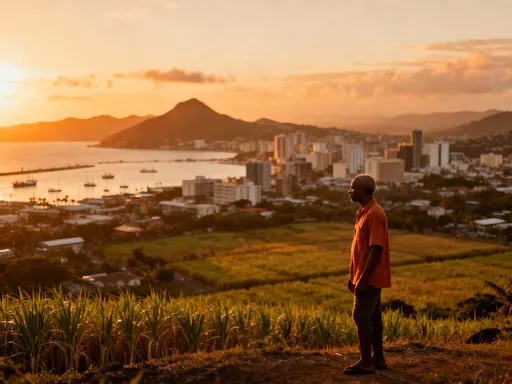
A short drive from the bustling streets of Port Louis, Montagne Longue offers one of the island’s most underrated sunset experiences. The road leading up is unpaved in parts, the parking area little more than a cleared patch of earth, but the journey is part of the charm. There are no facilities, no vendors, no crowds—just the open sky and the whisper of wind through the grass. As the sun begins its descent toward the western coast, the atmosphere shifts. The light turns soft and golden, casting long shadows over the sugarcane fields that blanket the lowlands. In the distance, wind turbines rotate slowly, their silhouettes stark against the glowing horizon.
From this elevation, you can see the curvature of the island’s edge, the way the land meets the sea in a gentle arc. Fishing villages along the coast begin to sparkle as lights flicker on in homes and small shops. The ocean, calm and vast, reflects the changing colors of the sky—first pink, then deep purple, then a velvety indigo. It’s a moment of near-silence, broken only by the occasional call of a bird or the rustle of leaves. Locals who come here often do so in pairs or small groups, speaking in hushed tones, as if not to disturb the peace. Some bring blankets, others cameras, but all seem to share a sense of reverence for the scene unfolding above them.
What sets Montagne Longue apart is its sense of solitude. Unlike more famous viewpoints that draw crowds at golden hour, this one remains largely undiscovered by mass tourism. There’s no Instagram frenzy, no race for the best photo angle—just the simple act of witnessing nature’s daily masterpiece. For families, it’s a chance to connect away from screens and schedules. For solo travelers, it’s a moment of introspection. The sunset here doesn’t demand attention; it earns it through quiet beauty. To experience it is to remember why we travel—not to collect destinations, but to feel the world in its most honest, unfiltered form.
Why Hidden Viewpoints Matter
These viewpoints—Caudan Waterfront at dawn, the grandstands of Champ de Mars, the quiet summit of Fort Adelaide, the serene terraces of Jardin de la Compagnie, the accidental overlook in Line Barracks, and the open skies of Montagne Longue—share more than just scenery. They represent a different way of engaging with a city. They invite slowness, curiosity, and presence. In an age where travel is often reduced to checklists and photo ops, these places offer something deeper: connection. They remind us that the heart of a destination isn’t always in its monuments or museums, but in the spaces where life unfolds naturally, without performance.
Choosing to seek out these hidden vantage points is a small act of resistance against the commodification of travel. It means valuing experience over convenience, depth over speed. It requires a willingness to wander, to ask directions, to climb a few extra steps. But the rewards are immeasurable. You gain not just memories, but understanding. You see how light moves across water, how communities shape their neighborhoods, how history lingers in stone and soil. You begin to feel the city not as a visitor, but as a temporary participant in its rhythm.
For women in their thirties to fifties—often balancing family, work, and personal dreams—these moments of quiet discovery can be especially meaningful. They offer a rare chance to step outside roles and routines, to breathe deeply and see the world anew. There’s a quiet empowerment in standing atop a hill at sunset, in finding beauty in an unmarked alley, in sharing a smile with a local elder who nods as you pass. These are not grand gestures, but they accumulate into something profound: a sense of belonging, even if just for a moment.
Port Louis, like any capital, can feel overwhelming at first. Its streets are busy, its pace brisk. But beneath the surface, it offers pockets of peace, layers of history, and vistas that stir the soul. The real journey isn’t about seeing everything—it’s about seeing deeply. It’s about choosing the path less crowded, the view less advertised, the moment less staged. Because in those quiet pauses, when the wind carries the scent of the ocean and the sky blushes with color, the city reveals itself. Not as a destination, but as a living story—and you, for a brief and beautiful moment, are part of it.