Taste of the Unexpected: Wandering Through Gwangju’s Soul on a Plate
You know that feeling when you stumble upon a city that doesn’t try to impress but ends up blowing your mind anyway? That was Gwangju for me. I went in chasing stories, but stayed for the food—steamy, bold, alive. Every alley seemed to whisper secrets of kimchi pots and simmering broths. This isn’t just eating; it’s wandering with your taste buds wide awake. And honestly? I never saw it coming. In a country where Seoul often steals the spotlight and Busan claims the coast, Gwangju moves to its own quiet rhythm—a city shaped by art, resilience, and a deep love for the table. Here, meals aren’t performances. They’re invitations. To slow down. To listen. To taste not just ingredients, but history, care, and community.
The Rhythm of Wandering: Why Getting Lost in Gwangju Feels Right
Gwangju does not rush. There is no urgency in its pace, no need to check off landmarks like tasks on a list. Instead, the city invites you to wander—not with a map, but with curiosity. Its streets unfold like chapters in a novel written by locals, where every corner holds a sentence worth remembering. The heart of this experience lies in neighborhoods like Geumnam-ro, a tree-lined boulevard where old-school cafes sit beside modern art galleries, and where street musicians play softly beneath murals that tell stories of resistance, hope, and renewal. It is here, between the brushstrokes and the breeze, that you begin to understand Gwangju’s soul.
Chinatown, one of Korea’s three official ethnic enclaves, adds another layer to the city’s tapestry. Though small in size, it pulses with energy—noodle shops steam behind glass windows, vendors call out specials in Korean and Chinese, and the scent of soy sauce and sesame oil lingers in the air. But this is not a tourist district packaged for spectacle. It is lived-in, authentic, and refreshingly unpolished. You won’t find flashy signs or English menus everywhere, and that’s part of its charm. Getting lost here isn’t a mistake; it’s a method. A wrong turn might lead you to a tiny dumpling stall where the owner nods at regulars, or to a courtyard garden tucked behind a bakery, blooming with azaleas in spring.
What makes wandering in Gwangju so effortless is its scale and design. The city is compact enough to explore on foot, yet rich enough in texture to feel endlessly surprising. Sidewalks are wide, crosswalks frequent, and green spaces thoughtfully placed. Public art is everywhere—not as decoration, but as dialogue. Statues of doves, murals honoring the May 18 Democratic Uprising, and poetry etched into stone benches remind passersby that this city remembers. And yet, it does not dwell. It moves forward with grace, carrying its past like a well-worn coat—comfortable, familiar, but never heavy.
For visitors, especially women traveling alone or in small groups, Gwangju offers a rare sense of safety and ease. Crime rates are low, locals are respectful, and the overall atmosphere is one of calm attentiveness. There’s no pressure to perform or impress. You can sit for an hour at a sidewalk table with a barley tea, watching life unfold, and no one will rush you. This permission to simply be is perhaps the city’s greatest gift. And when you’re allowed to slow down, your senses sharpen. You start to notice the steam rising from a basement kitchen, the sound of chopping garlic through an open door, the way an elderly woman arranges radishes in a market stall just so. These are the moments that pull you deeper—not toward sights, but toward feeling.
Gwangju’s Food Culture: More Than Just Kimchi
If Seoul is Korea’s political brain and Busan its maritime muscle, then Gwangju is its culinary heart. Located in Jeolla Province, long celebrated as the nation’s kitchen, the city thrives on a food culture rooted in abundance, seasonality, and generosity. This is not a place of minimalist plating or fusion experiments. Here, food is honest, deeply flavored, and made to be shared. The regional pride in cooking is palpable—locals speak of their cuisine with a quiet confidence, not boastful, but certain. To eat in Gwangju is to taste Korea at its most grounded.
At the core of this tradition is fermentation—a craft elevated to art. Kimchi, of course, is the most famous example, but it’s only the beginning. In home kitchens and market cellars, you’ll find rows of onggi—earthenware crocks—buried in the ground or stacked in shaded corners, each one nurturing something alive: soybean paste (doenjang), soy sauce (ganjang), or spicy seafood stew base (jeotgal). These ingredients are not bought in jars; they are made with time, patience, and inherited knowledge. A grandmother might spend days salting shrimp for myeolchi-jeot, or monitor the temperature of a fermenting cabbage batch like a nurse checking a patient’s pulse.
What sets Jeolla cuisine apart is its boldness. While northern dishes tend to be subtle and restrained, those from the south are rich, hearty, and unapologetically seasoned. This is farm country, after all, where labor demands fuel and flavor demands satisfaction. Meals are built around stews, braises, and grilled meats, often served with an abundance of banchan—small side dishes that range from pickled radish to seasoned bean sprouts to fermented squid. Quantity matters, but so does care. Every dish is a reflection of the season: in summer, cool cucumber soups and fresh herbs dominate; in winter, long-simmered pork back ribs and kimchi jjigae warm the bones.
Yet for all its richness, Gwangju’s food scene remains accessible. There are no pretensions, no gatekeeping. You won’t be judged for eating with your hands or asking for extra rice. In fact, asking for more is often seen as a compliment. Restaurants don’t hide their kitchens; instead, they leave them open, visible, sometimes even audible. You might hear the sizzle of a hot stone bowl being prepped or the rhythmic thud of a knife on wood. This transparency is part of the trust. You know the food is fresh because you see it being made. You know it’s loved because you see the cook’s hands moving with purpose.
Dawn Delights: Breakfast Bites That Kickstart the Day
In Gwangju, the day begins not with coffee, but with steam. Long before the sun climbs high, the markets are already alive—vendors arranging produce, chefs prepping dough, grandmothers folding dumplings with practiced precision. At Gwangju Jungoe Market, one of the city’s oldest and most vibrant, the morning air hums with activity. This is not a place for sleepy eyes or slow steps. It’s a sensory awakening.
One of the first things you’ll notice is the scent of hotteok—a sweet Korean pancake that has become a breakfast staple. At a small stall near the market’s east entrance, a woman flips golden-brown discs on a flat griddle, their centers bubbling with a molten mix of brown sugar, crushed peanuts, and cinnamon. The crust crackles when broken open, releasing a cloud of fragrant steam. Eating one is a two-handed affair, messy and joyful. There’s no shame in licking your fingers afterward. Nearby, another vendor steams baskets of mandu, their delicate wrappers translucent with heat, filled with pork, tofu, and chives. Served with a tangy soy-vinegar dip, they are soft, savory, and deeply comforting.
But perhaps the most grounding of all morning offerings is fresh soy milk, served in thick ceramic bowls at a no-name shop tucked between a fish stand and a kimchi vendor. The milk is warm, slightly gritty in texture—the way real, homemade soy milk should be—and topped with a skin that forms naturally during boiling. It’s accompanied by a small plate of seasoned seaweed or a piece of steamed pumpkin. There’s no menu, no signage, just a nod from the elderly owner as she pours. This is food stripped to its essence: nourishing, simple, and made with care.
What makes Gwangju’s breakfast culture so special is its rhythm. People don’t eat on the run. They sit on low stools, at narrow tables, and talk—about the weather, the price of radishes, their grandchildren’s school plays. Students in uniforms share hotteok with construction workers in dusty boots. Retirees sip soy milk and read the newspaper. There’s a sense of community in these early hours, a shared understanding that starting the day well means starting it together. And for visitors, joining this ritual—even silently, even as an observer—feels like being let in on a quiet secret: that the heart of a city beats strongest not at night, but at dawn.
Street Food Chronicles: Flavors That Find You
By midday, the energy shifts. The markets settle into a steady hum, but new life emerges around universities and transit hubs, where street food becomes the language of the streets. Near Honam University and Chonnam National University, the sidewalks narrow under the weight of food carts and student crowds. The air thickens with smoke, spice, and sugar. This is where affordability meets flavor, where a few thousand won can buy not just a meal, but a moment of joy.
Tteokbokki reigns supreme—a dish so iconic it needs no introduction. But Gwangju’s version has its own personality. The rice cakes are chewier, the sauce deeper, with a balance of sweetness and heat that lingers without burning. Some vendors add boiled eggs, fish cakes, or even ramen noodles to stretch the meal, turning it into a hearty bowl of comfort. It’s the kind of food that stains your fingers red and warms you from the inside out. Nearby, grilled odeng—fish cake on skewers—sizzles in a metal tray filled with broth. Served with a cup of the simmering liquid on cold days, it’s a humble pleasure, salty and satisfying.
Then there’s gyeran-ppang—egg bread—a small, round pastry with a whole egg baked into the top. Crisp on the outside, soft within, it’s sold from wheeled carts that appear like clockwork at 4 p.m. every day. Students line up after class, holding textbooks in one hand and warm paper bags in the other. It’s not gourmet, but it’s beloved. The combination of buttery dough and runny yolk is simple magic. And in a city where academic pressure is real, these small indulgences matter. They are pockets of warmth in a busy day.
What’s remarkable about Gwangju’s street food culture is how it functions as social glue. It’s not just about eating; it’s about gathering. Friends meet at a tteokbokki cart to debrief after exams. Coworkers share odeng sticks on a break. Parents treat children to gyeran-ppang on weekend strolls. There’s no hierarchy here—everyone stands, everyone waits, everyone enjoys. And because the prices are low, there’s no guilt in treating yourself. This accessibility ensures that good food isn’t a luxury; it’s a right. It’s also a reminder that joy doesn’t have to be expensive to be meaningful.
Hidden Eateries: Where Locals Dine Off the Radar
While tourists might flock to recommended restaurants, the true flavors of Gwangju are often found in places without names. These are the basement-level jip, the alleyway holes-in-the-wall, the spots where the menu is written in faded marker on a chalkboard, if it exists at all. They don’t appear on apps. They don’t have websites. But they are packed—every night, without fail—because locals know better.
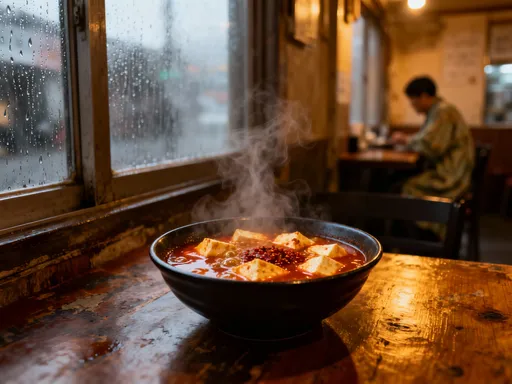
One such place, tucked behind a parking garage near the old city hall, serves only sundubu-jjigae—soft tofu stew. The room is small, lit by fluorescent bulbs, with plastic tables and stools that wobble slightly. The kitchen is visible through a pass-through window, where two women move in sync, ladling stew from large pots and shouting orders in rapid Korean. The dish arrives in a dolsot, still bubbling, its surface a swirl of red gochujang, silken tofu, clams, and a raw egg that cooks in the heat. It’s served with a mountain of banchan—kimchi, seasoned spinach, radish salad—and rice that refills automatically.
What makes this meal extraordinary is not just the flavor—though it is deeply savory, spicy, and complex—but the atmosphere. There are no tourists here. No English spoken. Just families, friends, coworkers, all eating with abandon. The noise level is high, the pace fast, the hospitality warm but unobtrusive. You don’t need to speak the language to feel welcome. A nod, a shared smile over a particularly spicy bite, the automatic refill of your soup—these are the gestures that build connection.
Finding places like this requires observation. Watch where the delivery bikes stop. Follow the office workers at lunchtime. Look for handwritten signs, steam rising from vents, or lines of shoes outside the door—Koreans often remove them even in casual eateries. These are the quiet signals of authenticity. And when you finally step inside, you’re not just eating—you’re being trusted. You’ve been allowed into a space that isn’t performative, isn’t designed for outsiders, but exists simply because it’s good, and real, and loved.
Market Immersion: Jungnim and Gwangju’s Living Pantries
No understanding of Gwangju’s food culture is complete without a deep dive into its markets. While Jungoe Market offers morning energy, Jungnim Market provides depth—a sprawling, multi-level labyrinth where every sense is engaged. This is not a sanitized supermarket or a weekend farmers’ market for tourists. It is a working pantry for the city, where generations come to buy, sell, and socialize.
Walking through Jungnim is an education. On the ground floor, fishmongers display their catch with pride—mackerel lined up like soldiers, octopus curled in ice beds, tiny shrimp still twitching. The smell is strong, briny, alive. But it’s not unpleasant—it’s honest. Nearby, vegetable stalls burst with color: purple perilla leaves, fuzzy squash, bright red chili peppers strung into garlands. Vendors call out prices, offer samples, banter with regulars. A woman might hand you a slice of raw radish with a wink, saying, “Eat, it’s good for the liver.”
One of the most striking sections is the kimchi alley—a row of stalls dedicated entirely to fermented vegetables. Here, you’ll find dozens of varieties: cabbage kimchi, cucumber kimchi, radish cubes in brine, spicy green onion bundles. Some are aged, their flavors deep and tangy; others are fresh, crisp and fiery. Housewives inspect batches like art critics, pressing gently to test firmness, sniffing for balance. Many buy in bulk, especially in late autumn, during gimjang season, when families gather to make enough kimchi to last the winter. It’s a ritual of preparation, yes, but also of connection—daughters learning from mothers, neighbors sharing recipes, communities supporting one another.
Jungnim Market changes with the seasons, and that’s part of its beauty. In summer, you’ll see mountains of cucumbers for oi-sobagi, stuffed with chili and garlic. In winter, the focus shifts to preserved foods—dried anchovies, fermented soybean blocks, jars of homemade gochujang. Even the air feels different—cooler in the cellar sections, warmer near the hot food counters. To spend time here is to witness Korean life in motion, unfiltered and unhurried. It’s also a reminder that food is not just fuel, but memory, identity, and care.
A Table with Meaning: How Food Connects You to Gwangju’s Heart
In the end, what stays with you about Gwangju is not a single dish, but a feeling. It’s the warmth of a shared meal at a family-run hanjeongsik restaurant, where the owner brings extra side dishes “because you look like you walked far.” It’s the laughter around a table of strangers at a late-night pojangmacha tent, passing bottles of soju and plates of spicy stir-fried chicken. It’s the quiet moment when an elderly woman at the market hands you a piece of sweet pumpkin and says, “For energy,” before turning back to her stall.
Food in Gwangju is never just food. It is language. It is welcome. It is memory made edible. When you’re offered a second helping, it’s not about hunger—it’s about inclusion. When a cook steps out of the kitchen to check if the stew is spicy enough for you, it’s not service—it’s concern. These gestures, small and unscripted, build a sense of belonging that no guidebook can promise.
And perhaps that’s the true magic of wandering here—not the sights you see, but the connections you make without trying. You don’t need to speak fluent Korean to be understood. You just need to show up, sit down, and eat with an open heart. Because in Gwangju, the table is always set, not just for meals, but for moments that feel like home. It’s a city that doesn’t shout, but whispers. That doesn’t dazzle, but endures. And if you let it, it will feed you in ways you never expected—not just your stomach, but your spirit.